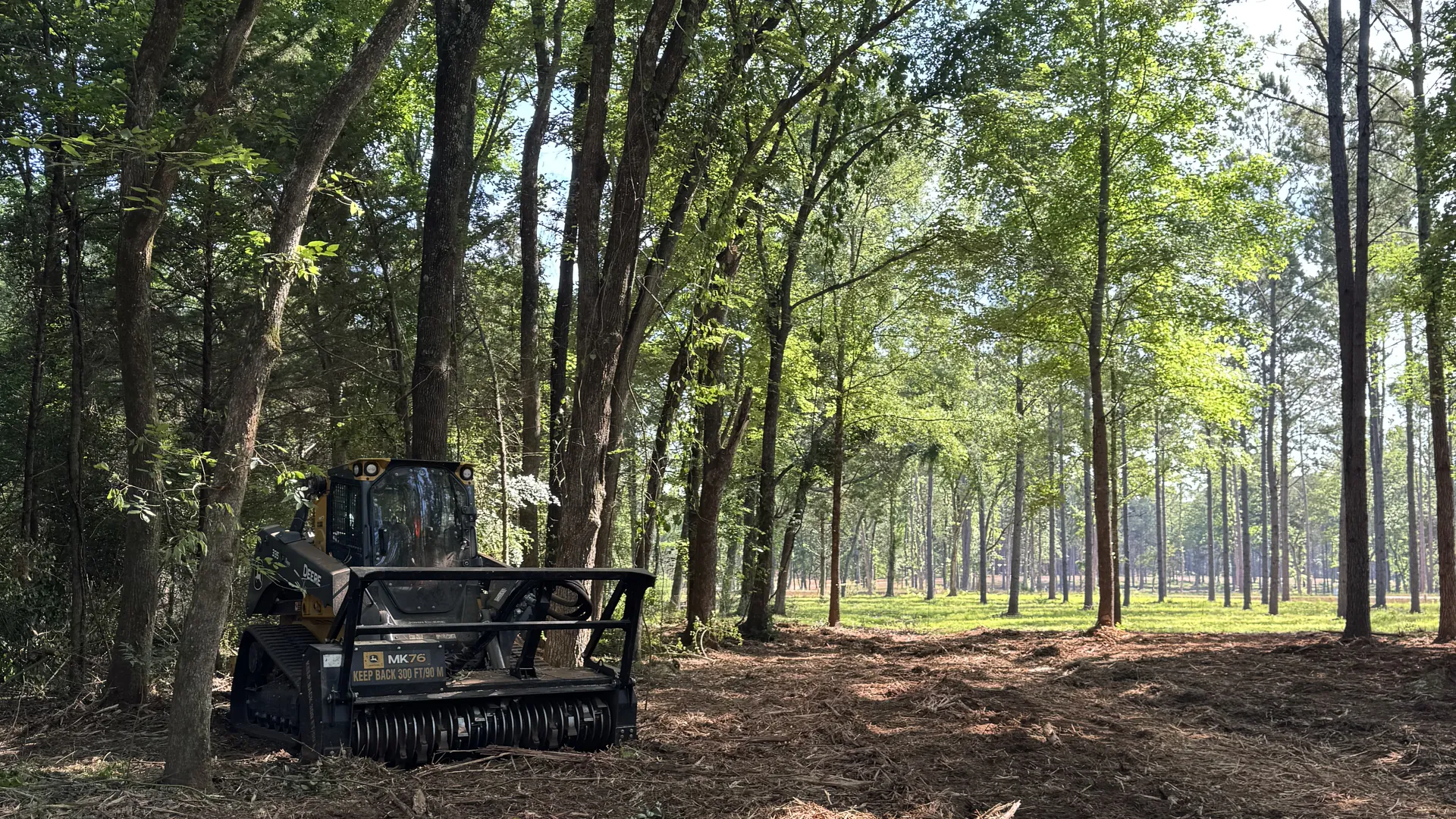
Get back onto the parts of your place you have not been able to walk in years. We mulch overgrown brush and small trees in place — reclaiming pasture, opening fence lines, cutting trails and clearing build sites.
Free estimate•Reliable machinery•Trusted operators
Most of what we do is give people their land back — a pasture that has been shrinking for a decade, a fence row you cannot walk, a trail that closed in, a lot you are ready to build on. Here is how forestry mulching works and what it costs per acre in Texas.
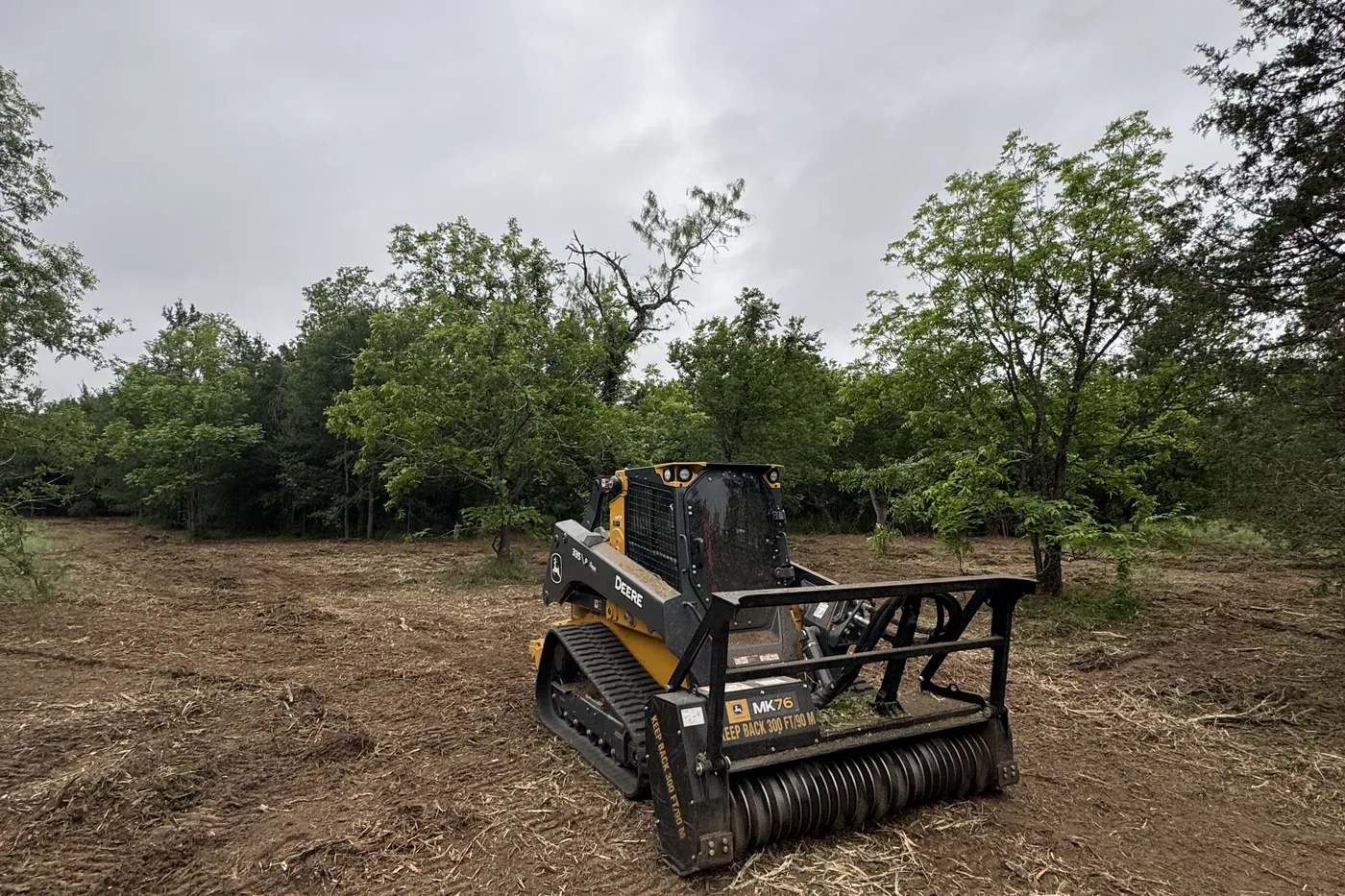
Thick understory taken out from under the trees you want to keep. Sight lines back, shade kept, ground you can walk again.
Get a quote for this →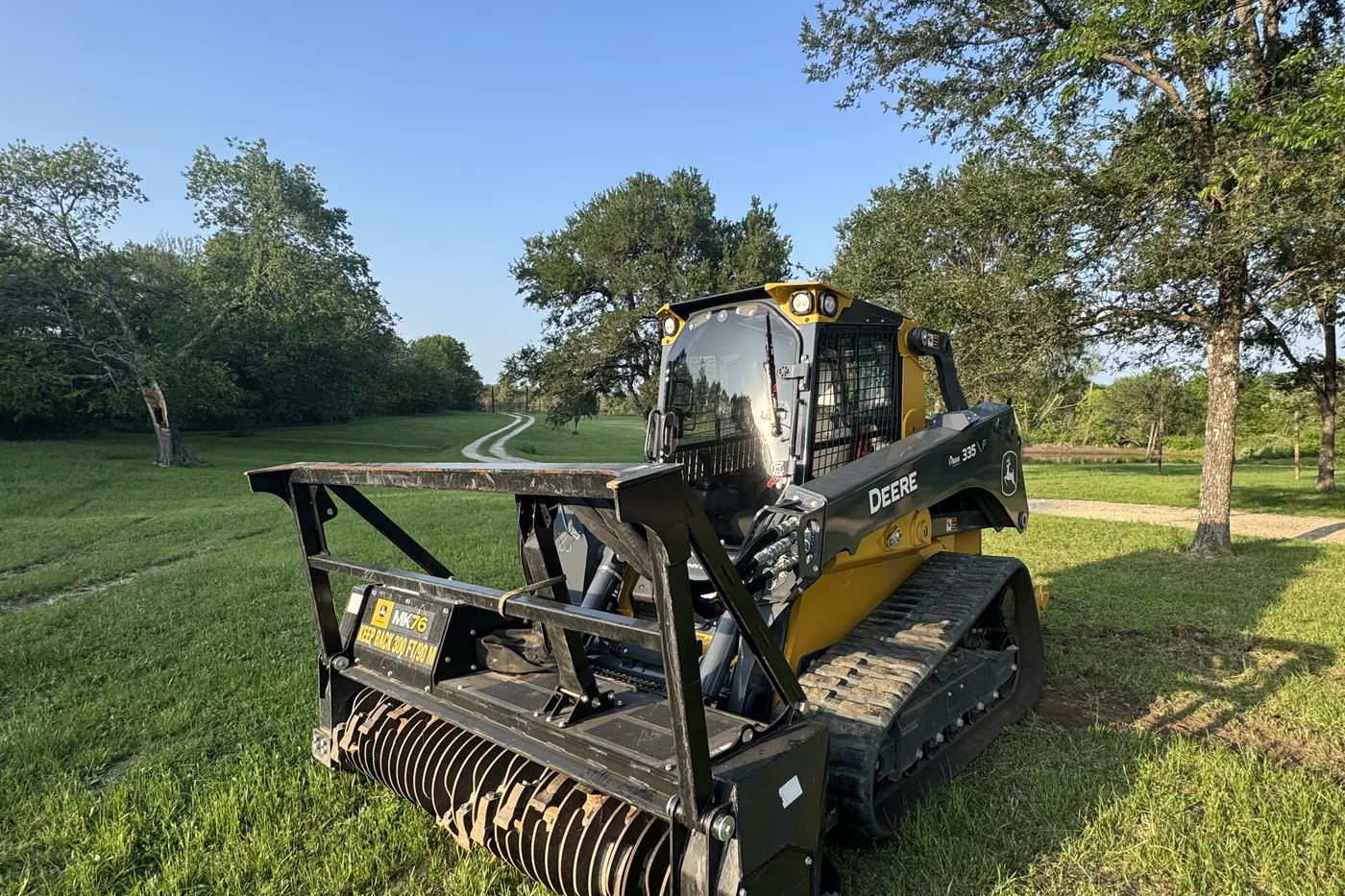
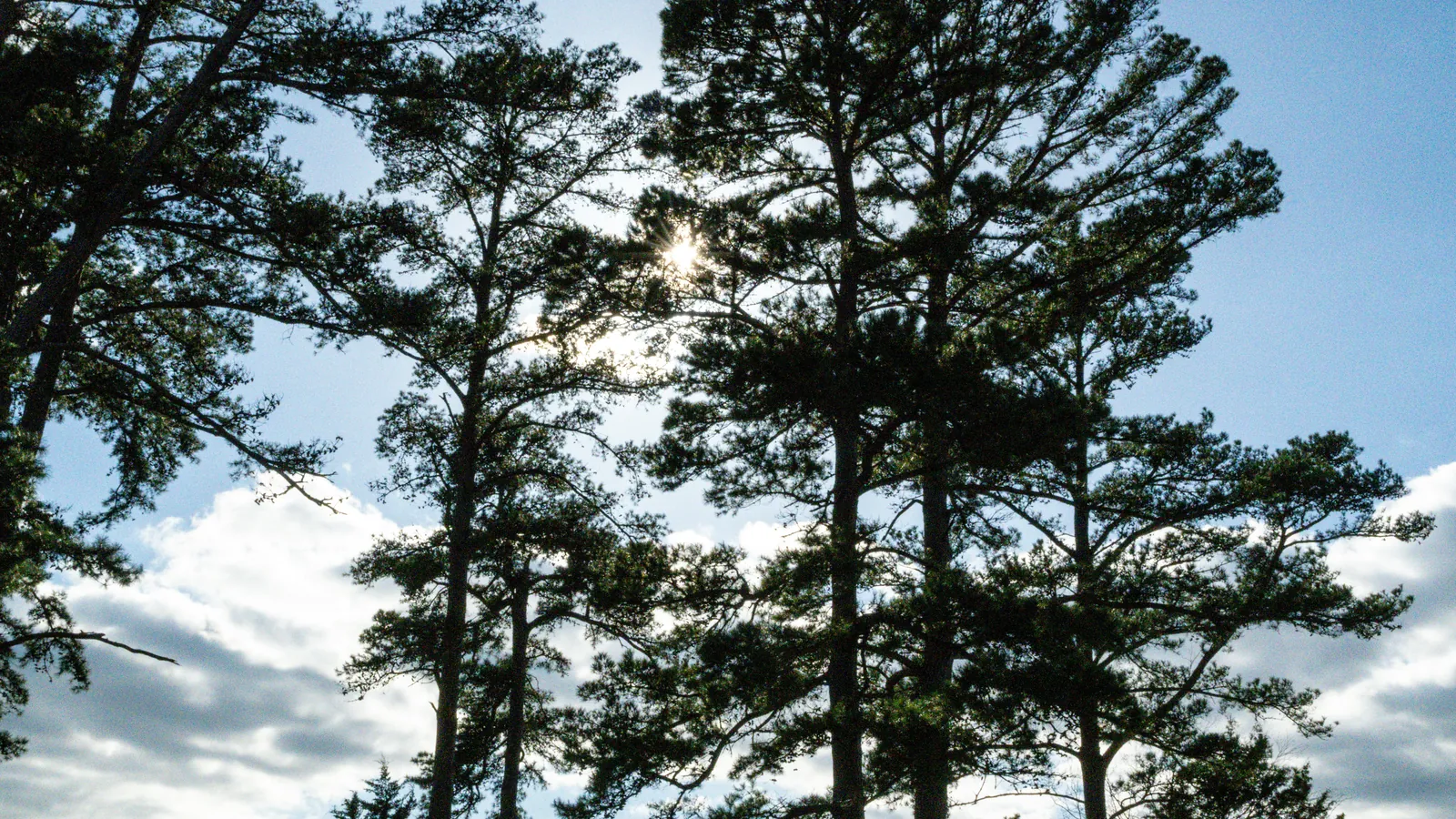
Build sites, septic fields and driveway routes opened up. Brush and smaller trees out, mature timber left standing.
Get a quote for this →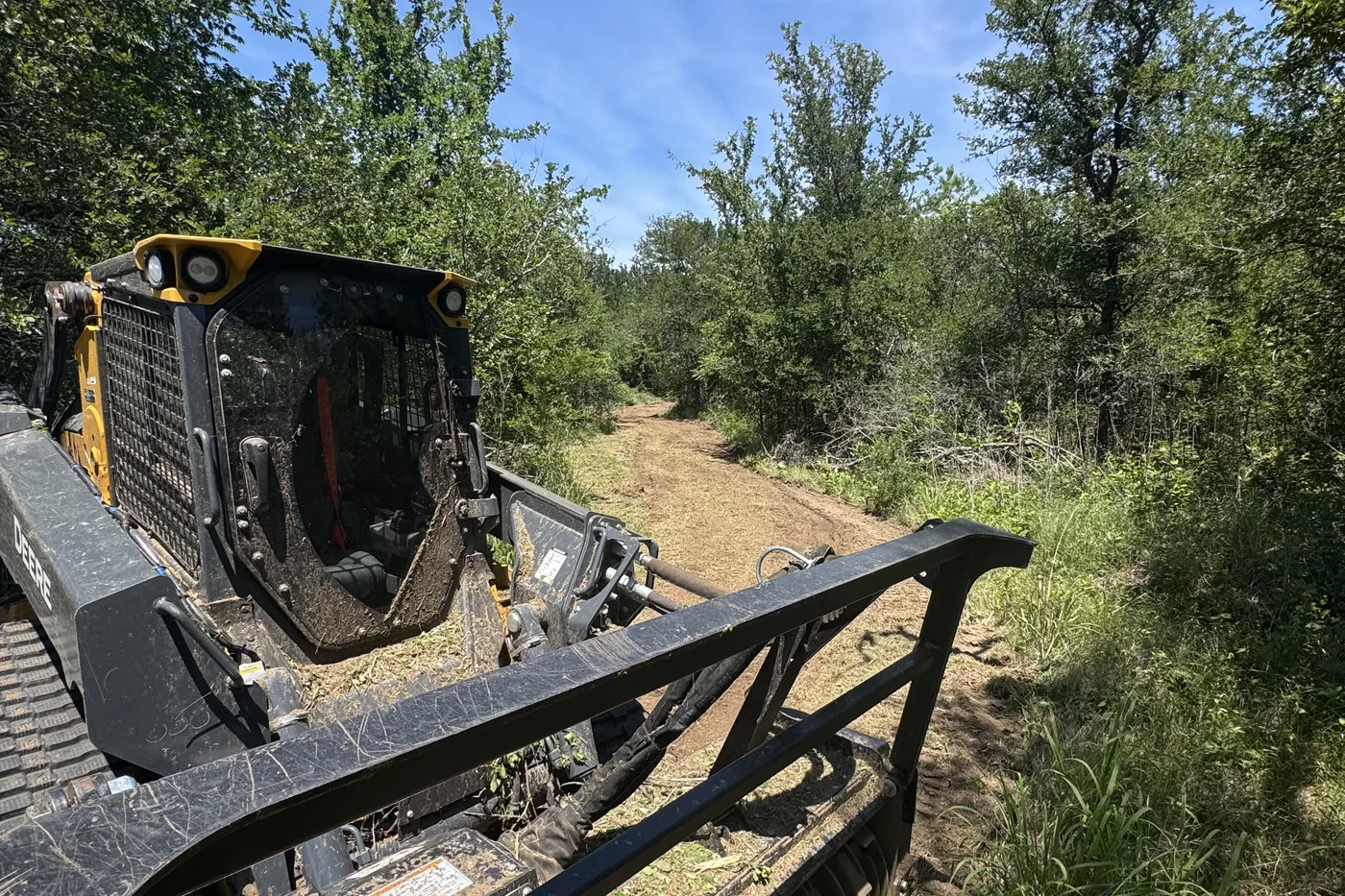
Fence rows opened up so you can see and fix your wire. Trails and lease roads cut wide enough for a truck and a trailer.
Get a quote for this →Clearing the old way is three separate jobs: cut it, pile it, then get rid of the pile. You pay for each step and you finish with scraped dirt, stump holes and a burn scar in the middle of your field.
Mulching grinds the brush into chips that settle into the ground where it grew. You get a soft mulch layer instead of bare dirt — it holds soil through a hard rain, keeps moisture in through August, and breaks down into something that feeds the native grass coming back underneath.
No burn ban delays, no dump fees, no burn scar. Just ground you can actually use again. It is not the right tool for every job — taking big timber off a property is dozer work — but for brush, underbrush and small trees nothing else comes close.
Here is exactly how it goes, start to finish.
Call or fill out the form with the location and rough acreage. A dropped pin or an address is enough for us to pull it up on satellite before we drive out.
Density drives cost more than acreage does. We look at stem size, how thick the understory is, slope, and how a trailer gets in. Then you get a firm number.
The mulching head grinds standing brush and small trees where they stand. No burn piles, no dump trailers, no gate ruts from hauling debris out.
You look it over while the machine is still on site. If a spot needs another pass, we make it then and there.
$1,800 covers a full day on your place — machine, diesel and operator. On light brush that is roughly an acre. Heavier ground covers less in a day, which is why it prices higher per acre. Nothing prices under $1,800, and if we finish early we keep working on whatever else you want cleared. You can price your own acreage in thirty seconds or read the full cost breakdown.
| Density | What it looks like | Per acre |
|---|---|---|
| Light | Scattered brush over grass, stems under 2" | $1,800 |
| Moderate | Continuous understory, stems 2"–4" | $2,200 – $2,600 |
| Heavy | Wall of yaupon, privet or cedar, stems 4"+ | $2,800 – $3,400 |
Small jobs under an acre are usually priced by the day or half day, since mobilizing the machine costs the same either way.
We run from the Blackland Prairie across the post oak belt into the deep Piney Woods. Here are the bigger towns we cover — the full list runs to 127.
Light brush is $1,800 an acre, moderate $2,200 to $2,600, heavy $2,800 to $3,400. $1,800 is also the minimum on any job, and it buys a full day on your place. Density decides how much ground a day actually covers.
The chips break down over one to three growing seasons depending on how thick the layer is and how wet the year is. That is the point of it. While it is breaking down it is holding your soil and feeding the grass underneath.
Some of it will. Species that resprout from the root, like mesquite and privet, come back and need a maintenance pass every few years. Ashe juniper does not resprout from a cut stump, so cedar country stays clean much longer.
Yes, and that is most of what we do. The operator picks what stays. Selective mulching around mature oaks and pines is the whole reason landowners choose this over a dozer.
Neither. Nothing gets burned and nothing leaves the property, so burn bans and landfill fees never enter the picture.
On sandy East Texas ground we can work through most of the year. On black clay prairie a soaked field will rut, so we watch the forecast and reschedule rather than tear up your ground.
Tell us where the property is and roughly how much needs clearing. We will get back to you with a plan and a price, not a sales pitch.